How to Find Your Real Style (Not the One Pinterest Picked for You)
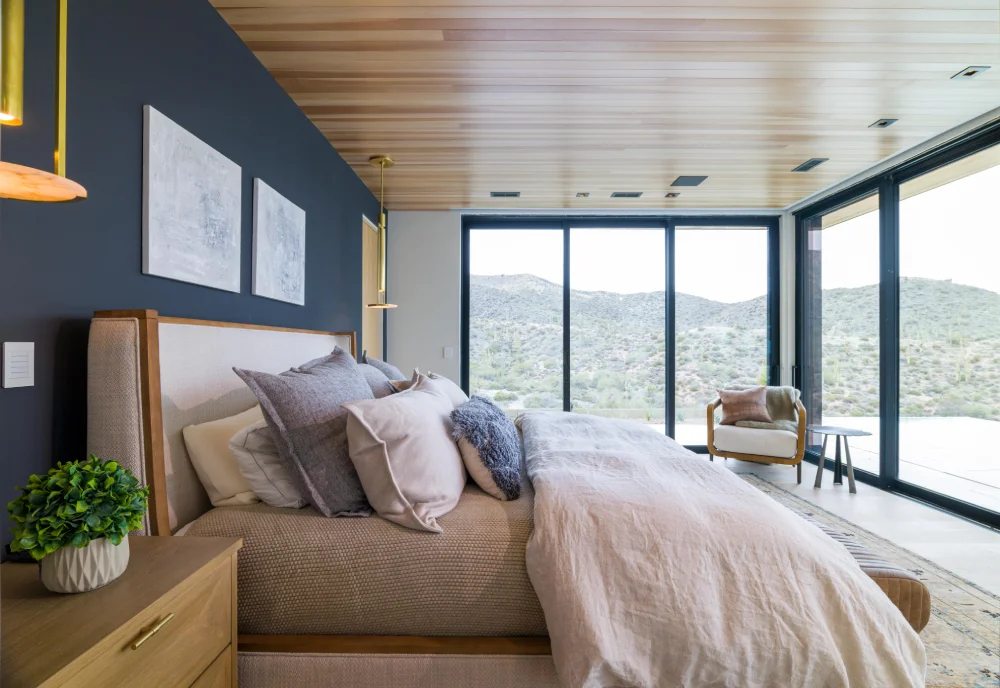
The part of this job I love most is the very first part: figuring out what a client actually wants.
People come to me with photos and ideas, I go see their home or spend some time talking with them, and pretty often I realize that what they're asking for isn't really what they want. There's a little bit of mind reading in it. My job is to get to know you and untangle the jungle of images you've sent me, so we can find what you really love instead of what's being fed to you online.
Everybody Brings Me the Same Photos
I can't tell you how many times I've seen the same Pinterest photos. It doesn't matter who the client is, or how different they tell me their style is, or how different their home actually looks. They bring me the same images. And that tells me it's probably not really them. There's usually one thing in the photo they genuinely love, so nobody's being dishonest about it. It's just really easy to get overwhelmed by all the options out there. You go looking for help, the algorithm feeds you something, and you think, well, maybe that would be good for me.
I'm not here to attack Pinterest. I actually think it's a wonderful tool. We just have to learn how to use it well, because the design we end up landing on is almost always a little different from what a client first showed me, and usually it's more true to them. We might start with white kitchens and white walls and a wood-toned island, and we end up somewhere a little more colorful: a backsplash tile with some life in it, a cabinet color, something a few shades warmer than stark white. It's never wildly far off from where they started. It just evolves into something that's actually theirs.
Everybody brings me the same photos. And that tells me it's probably not really them.
Get Offline Before You Do Anything Else
The first thing I tell my clients is to get offline. Get off the computer, go outside, and stop thinking about your project, even for just a couple of days. That won't blow your timeline. Then walk around your home and look at the things you really love and really connect with. It could be a piece of furniture. It could be a curtain. It could be the way one room gets washed with light in the afternoon. Start writing those things down.
Keep that list short, one to three things. Those are the pieces we launch from. There's nothing wrong with being inspired by a photo or by something in a friend's house, by the way. Inspiration is good. But the things in your own life that you keep coming back to are the most honest starting point we have.
.webp)
Then Use Pinterest the Right Way
Once you have your short list, go back to Pinterest and search for those exact things. If you love the blue tile in your shower, search blue tile. If you love a mid-century chair in your bedroom, search mid-century chair in a bedroom. Search the specific thing, and Pinterest will show you whole rooms built around it. The design of the entire space gets organized around the piece you already know you love, and from there you can pull other ideas in the same vein.
Compare that to searching something like "beautiful bedroom, light and airy." You'll get inundated. Thousands of styles and choices, and you're overwhelmed all over again. Pinterest is a great tool. We just have to narrow the search down.
Knowing What You Hate Is Just as Helpful
Another thing I tell every client: all feedback is good feedback. When I show you finishes and you hate something, tell me. That's one of the most helpful clues I can get, because when you know you hate something, you can usually identify why, and then we go find its opposite and see if you like that instead. It's completely okay to hate everything I put in front of you at first. At least it's something to work with.
Where AI Comes In
AI is another tool I lean on early. It's not always perfect, but it's getting better, and it's great for making sure a client and I are on the same page. If you come in describing a room and how you want it to look, I can plug it in and quickly show you something. You'll say yes or no. If the chair is bleeding into the table a little, that doesn't matter. What matters is whether we've captured the overall vision.
It's also great for finding out what you don't like. Sometimes you see your idea in a photo and realize it's not what you were picturing at all, which is honestly eye-opening, because then you're not stuck on the one idea that was holding you back. What AI can't do is read your face, understand your family, and make sure the space actually works for how you live. So it's at its best used alongside a designer, not instead of one.

Walking In Prepared
A lot of people get paralyzed by all the choices and the fear of making the wrong one. If that's you, the best first step is a small one. Get off Pinterest for a few days, notice the things in your life that genuinely feel like home, write them down, and then come talk to someone.
And when you do, you don't need a finished design vision yet. You just need a clear idea of what you want done in your home, and an honest sense of how much you're able and willing to spend on it. The most prepared clients tend to come in with exactly that, a clear scope and an honest budget, and that clarity up front lets us tell you whether it's achievable. It also means nothing stays hidden to surface later and delay things.
Bring a few images too, from Pinterest or from your own home, of things you genuinely resonate with. They don't have to be well thought out. A good designer can look at what you brought, watch your face as you talk through it, and help you tell the difference between what you actually love and what just looks acceptable to everyone else. That's where your real style has been the whole time.
Hailey Bolkema is an interior designer at Story Renovations. She came to interior design from a background in business administration and fell in love with the design-build process, from the budgets to the carpentry to seeing a design come to life.


