The Alchemy of Light: A Primer on Luxury Residential Lighting Design
In the world of high-end home renovation, we often obsess over the "tactile"—the vein of the marble, the grain of the white oak, or the weight of a custom brass handle. And yet, there is an invisible architect at play in every room: Light.
A physical element that is deployed artistically, lighting is the only element in your home that can fundamentally change the "volume" of a room and the mood of its occupants without moving a single wall. Residential lighting has evolved beyond simple fixtures; it is now a blend of biological science, architectural theory, and artistic expression.
Our team shares some of the "tricks of the trade" used by our designers to transform living spaces through the power of illumination.
"Lighting is the lifeblood of design, bringing energy to any space it touches." - Jean Rosenthal
1. The Theory: Human-Centric Lighting
Light is an active participant in a space and has long been studied for its specific effects on the body, wellness, and perception. Light can heal or harm, enliven or calm.
In the recent past, there has been a shift in luxury design toward Circadian Lighting, and interior lighting design that takes into account both the natural ambient light and use of light fixtures in a space. Our bodies are neurologically programmed to respond to the sun’s shifting color temperature, so consider not only which physical fixtures you choose, but the color and clarity the bulbs themselves will lend to your home.
- Color Temperature (Kelvins): High-end design avoids the "flat" feeling of mid-range light. We use 4000K (Cool White) in the morning for focus and cortisol production, and 1800K to 2400K (Warm Amber) in the evening to trigger melatonin.
You may find yourself instinctively leaning into a cooler or warmer temperature – one of our personal favorites is 2700K, and the good news is that many fixtures now provide the ability to adjust the temperature to suit the tasks that take place in the space or the time of day.
- Color Rendering Index (CRI): This is the measure of how "true" colors appear. In a luxury kitchen or gallery, we look for a CRI of 95 or higher. If you’ve ever walked into a space that felt “grey” or "muddy," you’ve experienced the impact of low-quality light, under
CRI of 95. Good CRI allows your space to vibrate with life, and it shows off high end fixtures and finishes.
2. Functional Layers: The Three-Layer Rule
A common mistake is relying on a "grid" of recessed ceiling cans. This creates "flat" light that flattens architectural depth and tends to make a space feel like a shopping mall or industrial park. Instead, we evaluate the space, how it will be used, and layer light that works both individually and together to create a beautiful space as a whole:
- Layer 1: Ambient (The Base): This provides general illumination. The "trade secret" here is indirect light. Rather than pointing lights down, we bounce light off the "Fifth Wall" (the ceiling) using hidden cove LEDs.
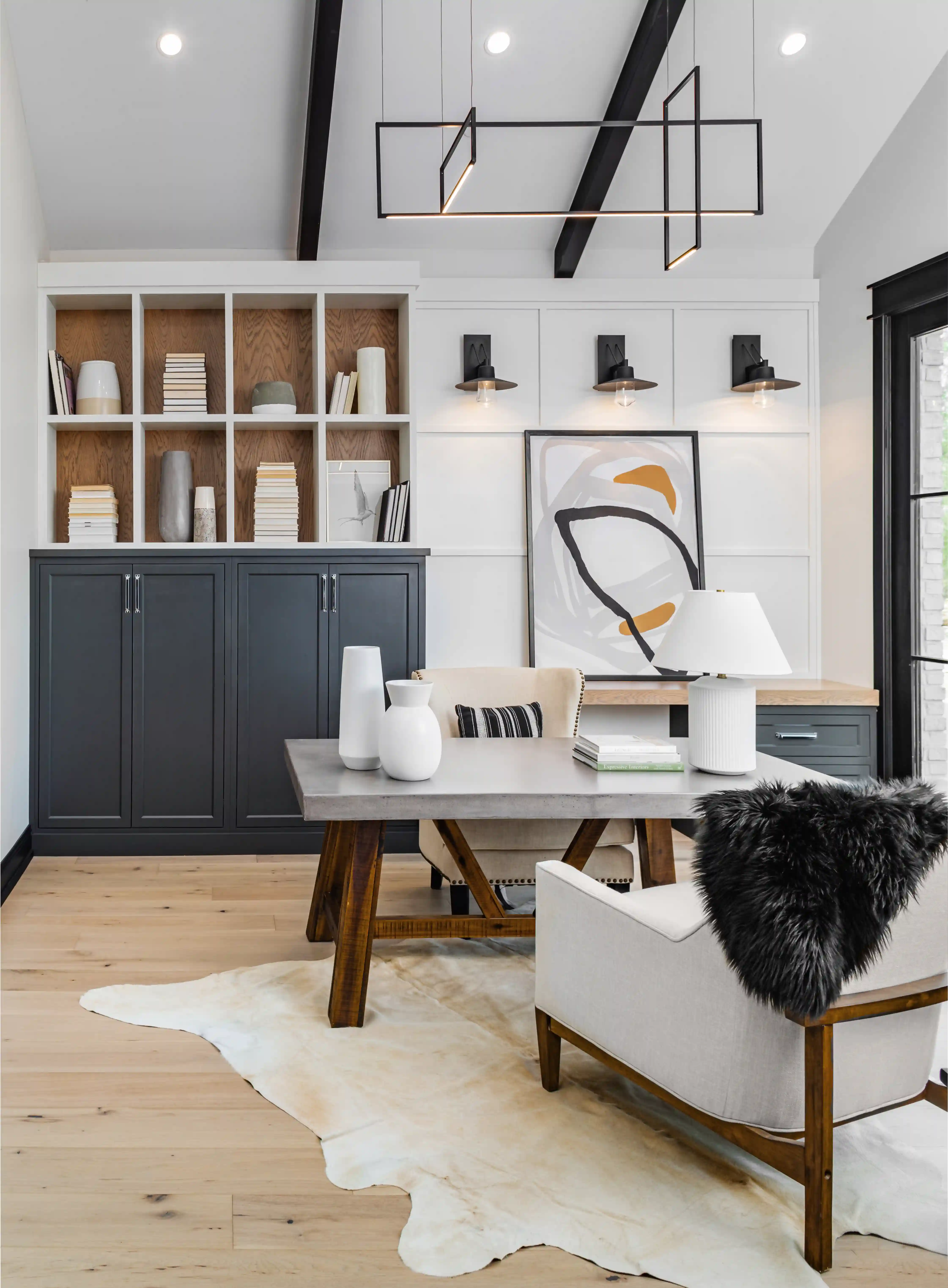
- Layer 2: Task (The Utility): Lighting with a purpose. In a kitchen, it’s under-cabinet LED strips that illuminate the counter without casting your own shadow over your work. In a bathroom, it’s side-lit sconces that provide cross-illumination, eliminating the harsh shadows under the eyes caused by overhead lights. In your home office, it is task lighting.
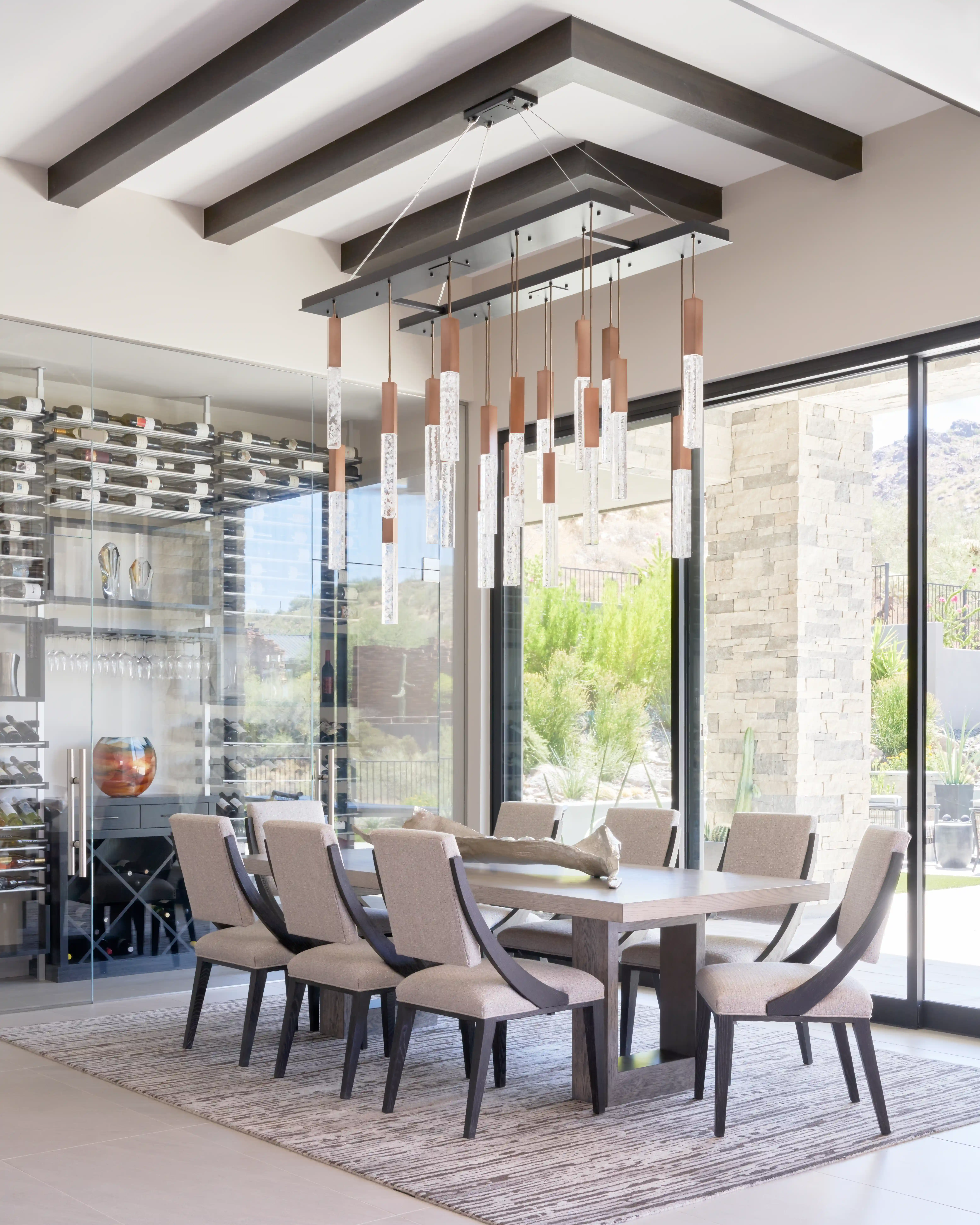
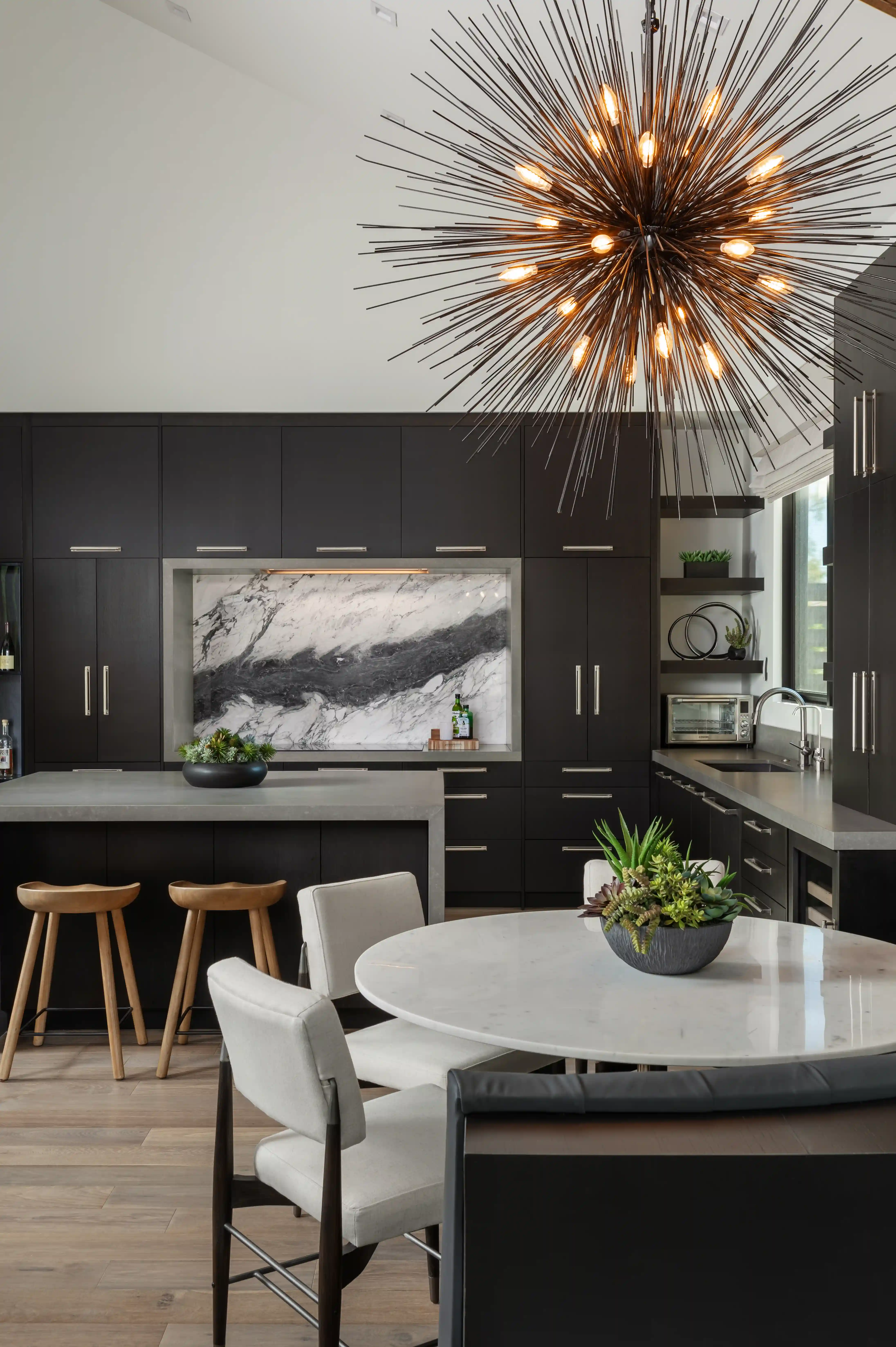
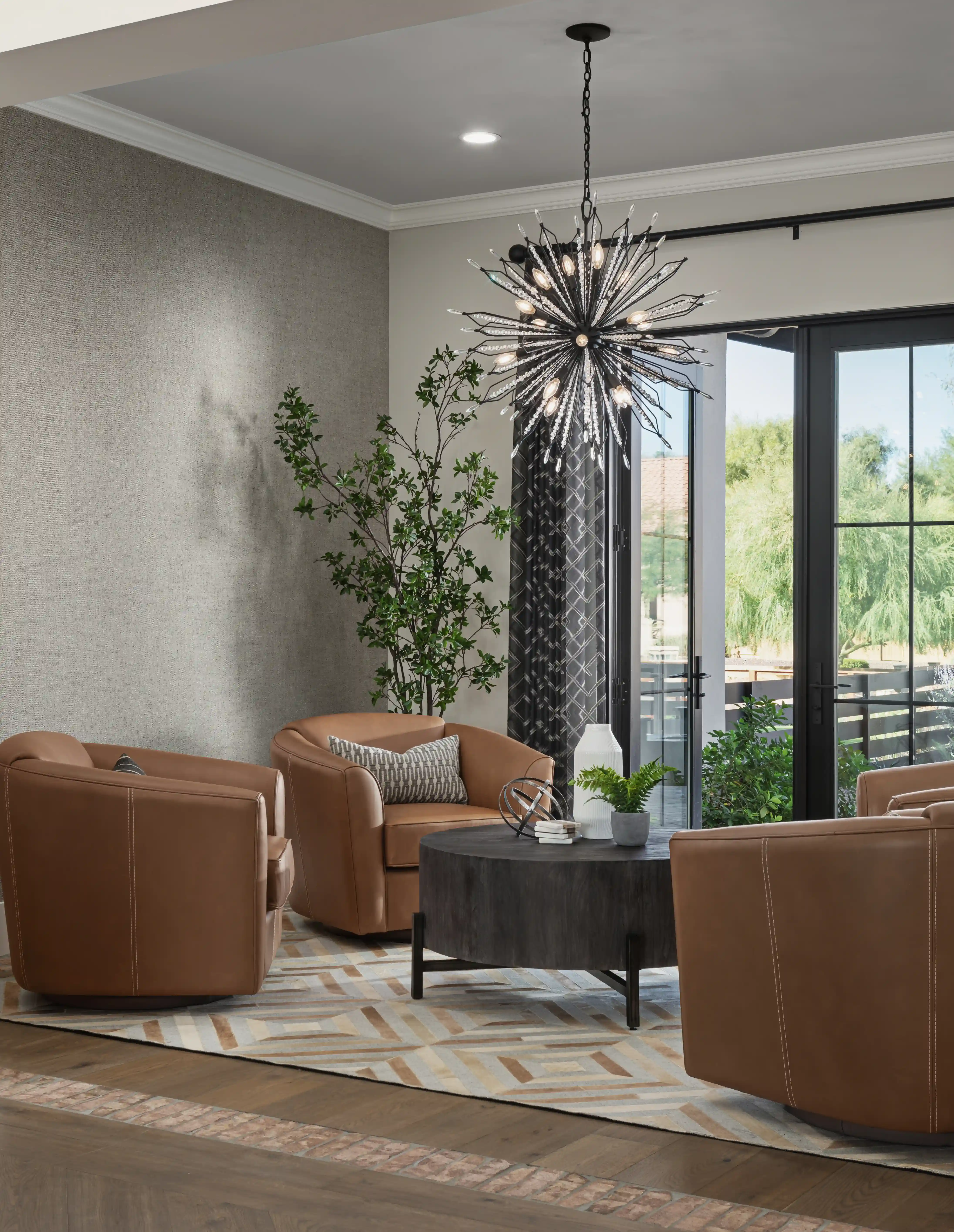
- Layer 3: Accent and Decorative: This is where the fun comes in, and lighting functions purely for drama. For accent lighting we have a "3-to-1 Rule": an accent light should be three times brighter than the ambient light to properly draw the eye to a piece of art or a textured wall or to the light fixture itself as the focal point of the space. Accent lighting can be as simple as artfully placed sconces or as specific and spots focused on art or architectural detail. Decorative fixtures range from table lamps to sculptural ceiling fixtures, dramatic pendants and chandeliers, statement pieces that become the jewelry of the space.
3. Aesthetics: Design Tricks of the Trade
This is where the "alchemy" of light happens. As designers we use specific techniques to manipulate how a space feels:
Creating a Curated ‘Dialog’ Between Lighting Fixtures: To master the alchemy of a residential space, one must move beyond the "matching set" mentality and instead embrace a curated dialogue between fixtures. Think of your lighting as a visual
ecosystem: balance a bold, geometric pendant with the soft, organic curves of a hand-blown glass sconce to create a pleasing tension. Texture plays a pivotal role here. Pairing the industrial grit of blackened steel with the warmth of a pleated fabric shade or the shimmer of fluted glass adds a layer of tactile luxury that flat surfaces cannot achieve. By varying the visual weight and silhouette of your pieces, you ensure that each fixture has its own "voice" while contributing to a cohesive narrative, turning a functional necessity into a sophisticated gallery of light. Here’s how to create a dialog in real life:
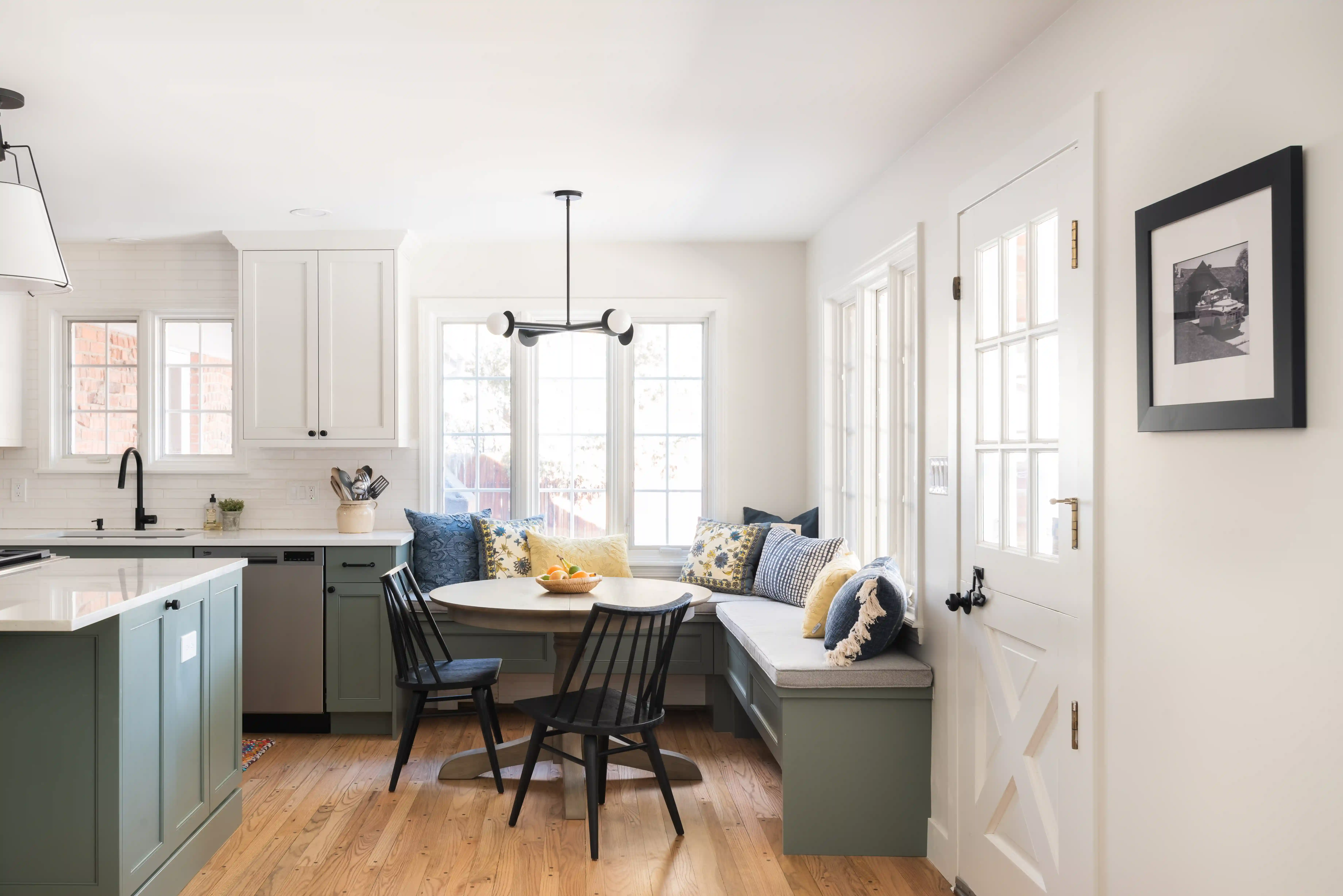
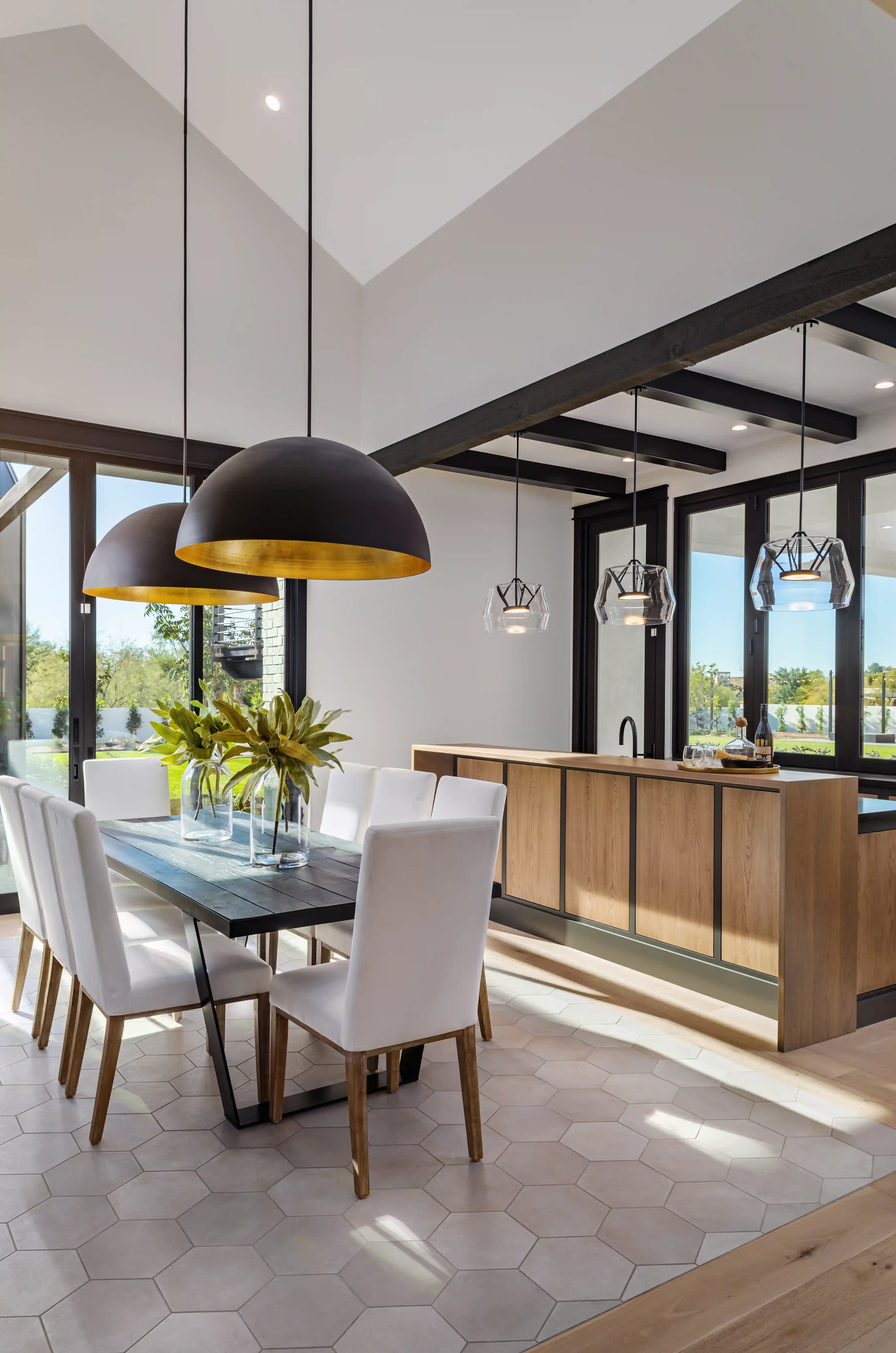
- Don’t get stuck in the ‘Everything Must Match’ Rut. Contrary to what you might think, mixing metals and textures is the best way to add intentional interest and depth to your space. Mix three distinct finishes (Aged Brass, Matte Black, and Clear Glass as an example) to keep the look intentional rather than accidental.
- Contrast is Queen: If the furniture is angular and modern, suggest lighting with softer, spherical shapes to "break" the lines of the room.
- Layering Levels: Alchemy happens when you address the levels, or different heights, at which we sense light—eye level (sconces), overhead (pendants), and floor level (lamps).
The "Invisible Source" Trend: The goal in 2026 is "Glow, not Glare." We integrate lighting into the joinery—recessed into the "toe-kick" of kitchen cabinets to make them appear to float, or hidden inside handrails to illuminate stairs safely without visible bulbs.
4. Regional Challenges: Denver vs. Scottsdale vs. Dallas
We design homes in three distinct regions. In a luxury renovation, geography isn't just a location—it’s a set of environmental constraints that dictate how light will behave, and what lighting plan will best interact with natural conditions.
The Denver Challenge: High-Altitude Intensity
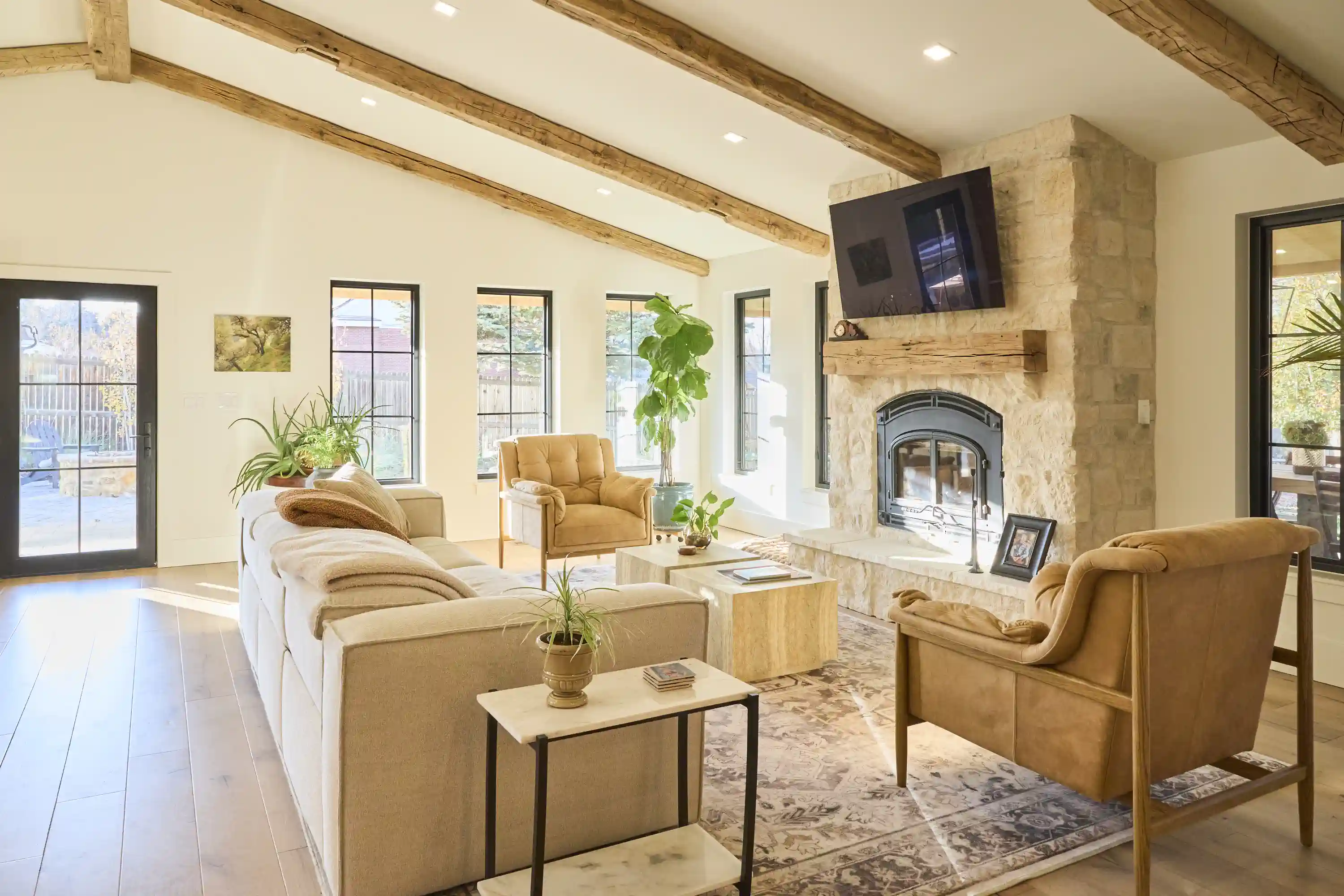
In the Mile High City, the sun is physically closer, and its UV intensity is significantly higher.
- The Problem: Denver's light can feel "sharp" and cool, especially during the winter when snow reflection adds a blue-toned glare to the interior.
- The Trade Secret: We use layered dimming and warmer 2800K baseline temperatures to bring biological warmth back into the home. Because Denver's light changes drastically from high noon to the early 4:00 PM winter sunset, automated "scenes" are essential to maintain a cozy atmosphere.
The Scottsdale Challenge: The "Black Mirror" Effect
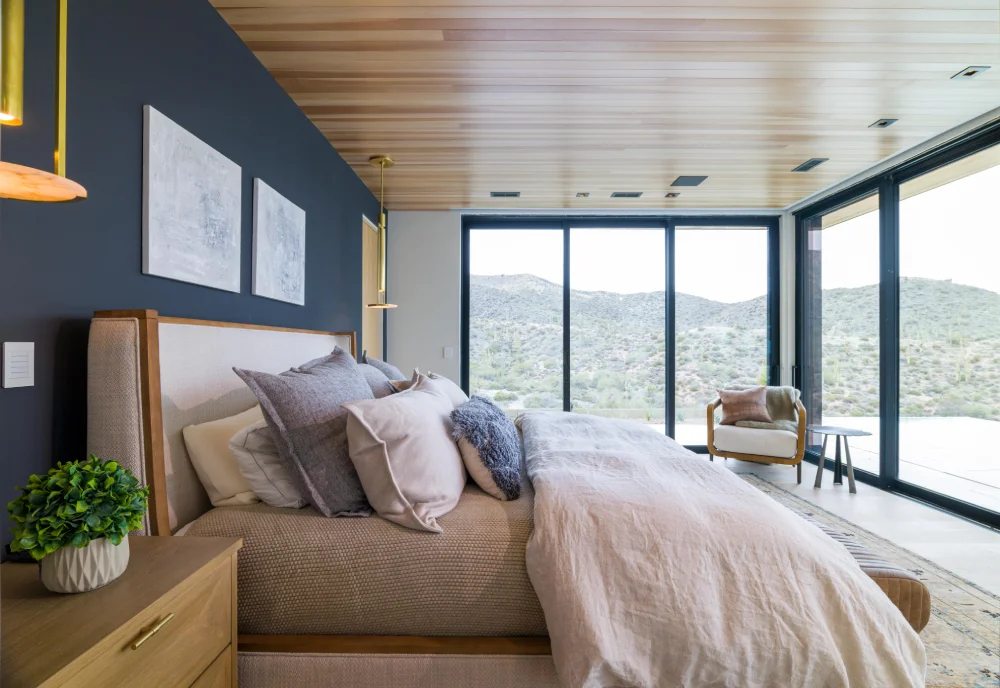
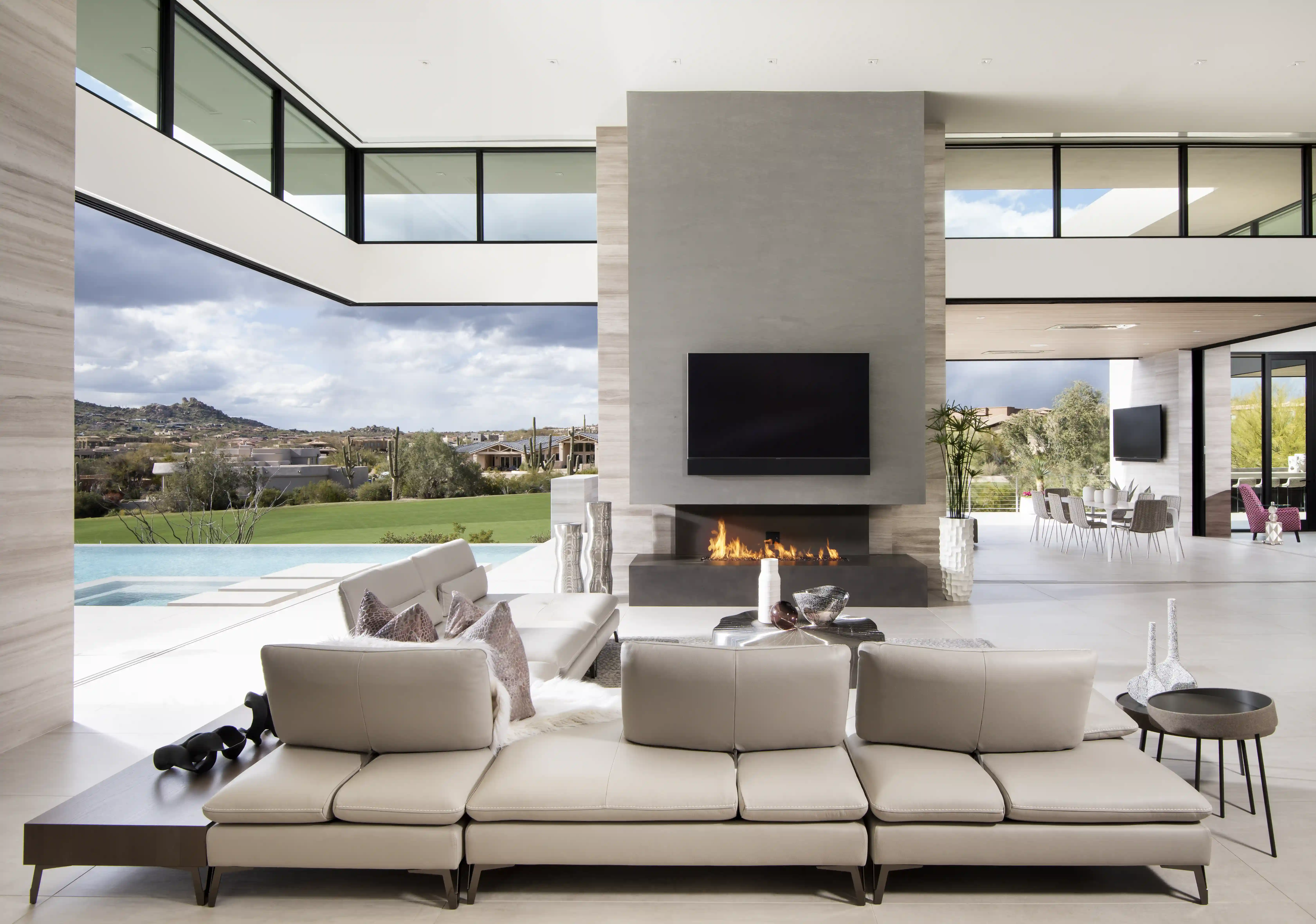
Scottsdale architecture is defined by expansive glass walls that blur the line between the Sonoran Desert and the living room.
- The Problem: At night, large glass voids become "black mirrors"—reflecting the interior lights back at the occupants and killing the view of the desert stars.
- The Trade Secret: Exterior-Interior Balancing. By lighting the Saguaros and desert flora outside, you "push" the eye past the glass. This eliminates the reflection and makes the room feel like it extends into the horizon rather than stopping at the windows.
The Dallas Challenge: Managing "Hot" Light & Humidity
Dallas design must reconcile a desire for "Southern Grandeur" (high ceilings and large windows) with the brutal reality of Texas summers.
- The Problem: Solar Heat Gain. Large east and west-facing windows in North Texas can act as heaters, forcing HVAC systems to work overtime. Furthermore, the high humidity can create a "haze" that softens natural light but increases glare.
- The Trade Secret: Performance Glazing & Sculptural Shading. In Dallas, we prioritize windows with Low-E coatings to filter IR/UV rays without losing visible light. Architecturally, we use deep overhangs or automated exterior louvers to block the high-angle summer sun. Inside, we use "grazing" techniques on statement stone walls to distract the eye from the functional glare-control screens often needed on large Texas window banks.
5. The Decision: Visualizing Before the Build
Lighting is one of the most difficult and expensive things to "undo" once the drywall is up and the wiring is set, and whether we’re working on a new custom home or remodel, we spend time optioneering and visualizing the impact of lighting decisions with our clients.
Take time to consider your space, the mood you want to create, and make notes of how you use the space over the course of a day, a week, or a month. Before committing to a lighting plan, homeowners can use the Story AI Design Studio to visualize how different architectural features—like beamed ceilings or double-height voids—will interact with light. By seeing a rendered visualization of a "warm" vs. "cool" kitchen, you can make informed decisions that align with your wellness goals and aesthetic vision.
Elevate your everyday by starting with the light.
Ready to visualize your project?
Try the Story AI Design Studio today to see your vision in a new light